
Profluent's ProGen Model Achieved Breakthrough in Protein Design
Summary
Profluent's initial 1.2 billion-parameter ProGen model, once the largest in physical sciences, successfully generated novel proteins with exceptionally high hit rates. These de novo proteins demonstrated functionality comparable to those evolved over millions of years, marking a significant advancement in the field.
Why it matters
This past achievement highlights the transformative potential of AI in fundamental scientific research, particularly in drug discovery, materials science, and biotechnology, by accelerating the design of novel functional molecules.
How to implement this in your domain
- 1Explore current AI models for de novo protein design and their applications in your research.
- 2Investigate partnerships with companies like Profluent for advanced protein engineering capabilities.
- 3Assess how AI-driven molecular design could accelerate drug discovery or material development pipelines.
- 4Stay updated on advancements in large language models for scientific domains to identify new opportunities.
Who benefits
Key takeaways
- Profluent's ProGen model pioneered de novo protein design.
- The model generated proteins with high hit rates and functionality.
- AI can create proteins comparable to those evolved naturally.
- This represents a significant advance in physical sciences and biotech.
Original post by @nathanbenaich
"Profluent's first 1.2B parameter ProGen model, the largest in physical sciences at the time produced de novo proteins that showed incredibly high hit rates and functionality rivaling proteins with millions of years of evolution. So much has happened since :)"
View on XOriginally posted by @nathanbenaich on X · view source
Want to go deeper?
Turn these trends into skills with Learnijoy's hands-on AI & tech courses.
Explore coursesMore in AI Research

New Research Explores AI Reward-Seeking Behavior and Measurement
New research with Apollo AI Evals investigates "reward-seeking" in AI models, where models prioritize grader rewards over user intent. They introduce Contrastive SDF, a new method to measure how strongly these beliefs about grader preferences shape model behavior, which is crucial for generalization.
Poolside and Laguna Advance Open Model Development in the West
Poolside and Laguna are actively contributing to the development of open models, with a "model factory" approach that aims to release new models frequently. This effort is highlighted as crucial for Western leadership in the open-source AI space.
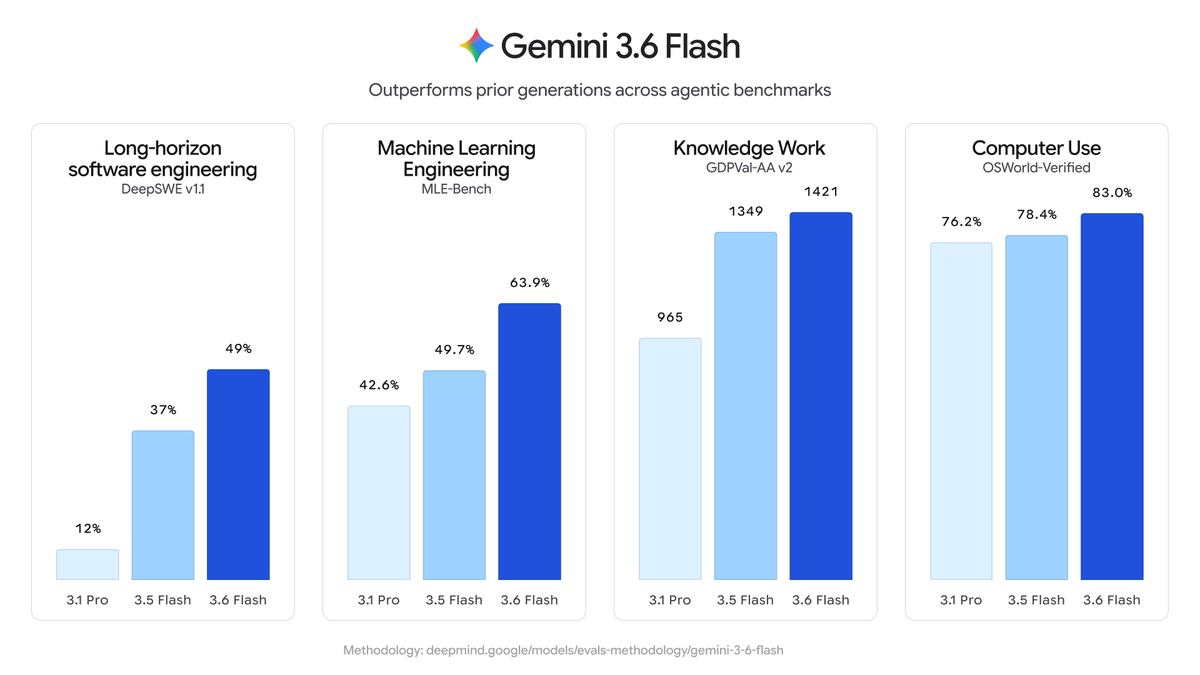
Gemini 3.6 Flash Improves Code Generation and Multimodal Tasks
Gemini 3.6 Flash, an iteration building on 3.5 Flash feedback, shows significant improvements in code generation, producing production-ready code faster and avoiding loops. It also excels in multimodal tasks like chart analysis, document understanding, and report drafting, and is rolling out across Gemini App and developer platforms.